
Ingrown Toenails: When Home Care Stops Working
Ingrown toenails are among the most frequently treated conditions in podiatric medicine, and while many cases resolve with proper at-home care
Read More
--(3-x-1-in).jpg)


Noticing purple feet can feel alarming, especially when the color change appears suddenly or without a clear reason. If you’ve noticed this change, it’s normal to question what’s causing it and why do my feet look purple, particularly when there’s no obvious explanation.
Understanding what causes discoloration, what symptoms to watch for, and when to seek care can help you make informed decisions about your foot health.
When you notice purple colored feet, it typically relates to how blood is flowing through the small vessels in your feet. Healthy circulation delivers oxygen-rich blood to tissues, giving skin its normal tone. When that flow is reduced, slowed, or temporarily altered, the skin may appear purple, blue, or darker than usual.
In many cases, this discoloration is temporary and resolves on its own. However, persistent or recurring changes may indicate that the body is not circulating blood efficiently, which can be linked to underlying conditions.
There are several possible purple feet causes, ranging from mild to more complex conditions.
Reduced blood flow to the feet can lead to discoloration, especially during activity. Some people also experience cramping or fatigue in the legs when walking, which improves with rest.
When veins struggle to return blood to the heart, it can pool in the lower extremities. This may cause swelling, heaviness, and a noticeable change in purple color feet, particularly after long periods of standing or sitting.
Cold weather can temporarily narrow blood vessels, reducing circulation to the toes. This may cause a purple or bluish appearance that typically improves once the feet are warmed.
This condition affects how blood vessels respond to cold or stress. People may notice their toes turning pale, then blue, and eventually toes turning purple before returning to normal color.
A localized purple area may simply be the result of a bruise. This type of discoloration is usually limited to one spot and fades as the tissue heals.
Individuals with diabetes may experience reduced circulation and nerve changes in the feet. This can contribute to discoloration and increase the risk of slow-healing wounds.
In some cases, a blood clot in the leg can affect circulation and cause discoloration, swelling, and discomfort. This situation requires prompt medical evaluation.
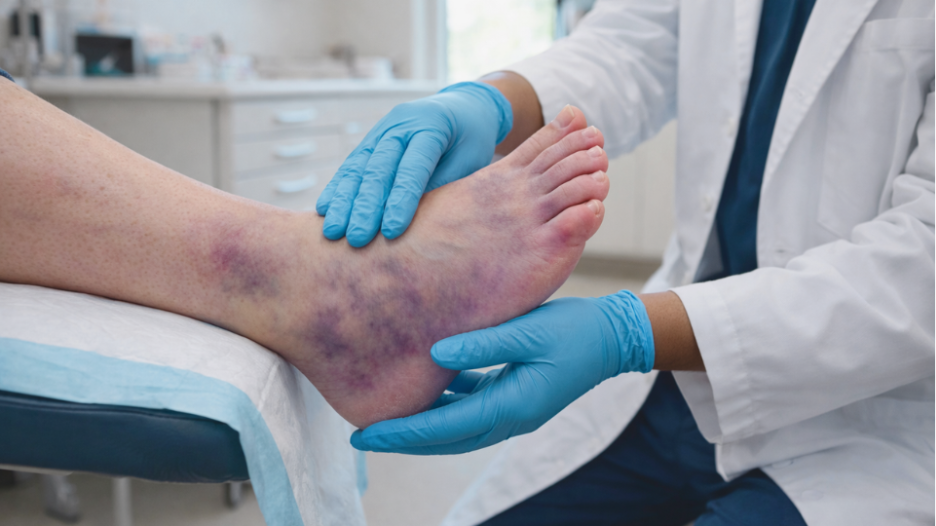
When evaluating purple feet, a podiatrist will typically begin with a review of your symptoms and medical history. They may also examine circulation in your feet by checking pulses, skin temperature, and overall appearance.
If needed, additional tests may be recommended to better understand blood flow or rule out underlying conditions. The goal is to identify the cause of the discoloration and guide the most appropriate next steps for care.
Treatment for purple coloured feet depends on identifying the underlying cause of the discoloration. In many cases, improving circulation and addressing contributing factors can help reduce color changes.
Approaches may include:
Because causes can vary, care is typically tailored to each individual rather than a one-size-fits-all approach.
Simple daily habits can help support circulation and overall foot health:
These steps can help reduce strain on the circulatory system and support long-term foot health.
While some color changes are temporary, persistent or unusual symptoms should not be ignored. Certain warning signs may indicate that the discoloration is related to circulation or an underlying condition that needs evaluation.
It may be time to seek care if you notice:
A podiatrist can assess circulation, review your symptoms, and help determine the underlying cause so the appropriate next steps can be recommended.
Noticing purple feet can be concerning, but it’s not always a sign of something serious. While some cases are temporary, persistent discoloration may point to circulation or underlying health issues that should be evaluated.
If you’re experiencing ongoing discoloration or related symptoms, the team at Foot & Ankle Specialists of The Woodlands provides care for patients across The Woodlands, Huntsville, and the greater Houston area. You can explore our clinic locations or book an appointment online to get the evaluation you need.

Ingrown toenails are among the most frequently treated conditions in podiatric medicine, and while many cases resolve with proper at-home care

Learn to recognize the symptoms of an infected foot, key warning signs to watch for, and when to see a podiatrist for safe and effective treatment.