
Ingrown Toenails: When Home Care Stops Working
Ingrown toenails are among the most frequently treated conditions in podiatric medicine, and while many cases resolve with proper at-home care
Read More
--(3-x-1-in).jpg)
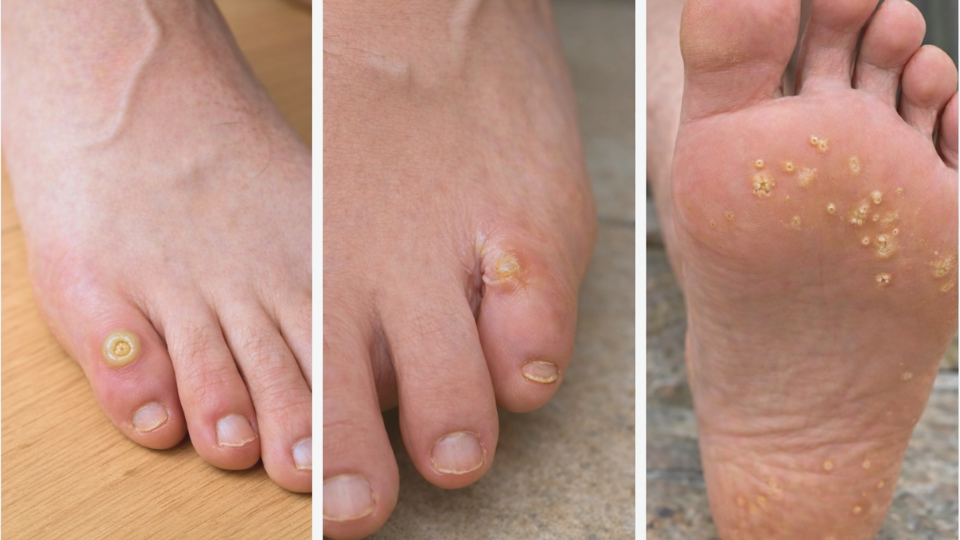


Corns are a common foot condition, but not all corns look or feel the same. These small, thickened areas of skin develop gradually due to repeated pressure or friction, often forming in areas where the foot experiences the most stress. Understanding the different types of corns on feet can help you identify what you’re dealing with and take the right steps to relieve discomfort.
While corns may seem minor at first, they can become painful over time and affect how you walk or wear shoes. Recognizing the differences between each type is key to managing symptoms effectively and preventing them from coming back.
Corns are areas of hardened skin that develop as the body’s natural response to pressure or friction. Unlike calluses, which tend to be larger and less defined, corns are typically smaller and may have a central core that presses into deeper layers of the skin.
They most often form due to:
Over time, this repeated stress causes the skin to thicken in a concentrated area, creating a corn that can become tender or painful when pressure is applied.
There are several foot corn types, each with distinct characteristics. Identifying the specific type can help guide the most effective treatment approach.
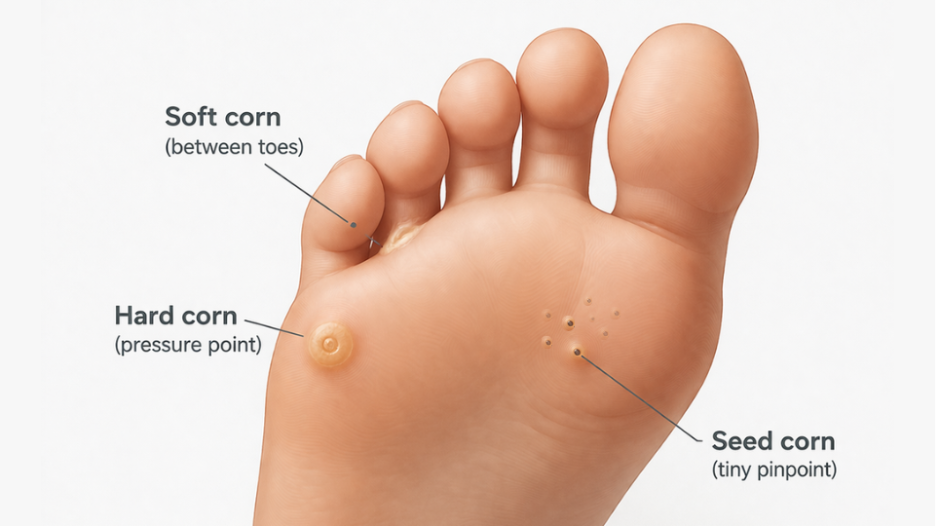
Hard corns are the most common type. They usually develop on the tops of toes or along the outer edge of the foot, where pressure is greatest.
They appear as small, round areas of thickened skin with a dense center and can be painful when walking or wearing shoes, often feeling like a pebble inside the shoe.
Soft corns form between the toes, most often between the fourth and fifth toes. They have a whitish, softer appearance due to moisture in these areas.
A soft corn develops when toes rub together, especially in tight footwear, and may lead to irritation or skin breakdown.
Seed corns are smaller and less common. They typically appear on the bottom of the foot in weight-bearing areas.
A seed corn on foot looks like a tiny pinpoint spot and may occur alone or in clusters. Often linked to dry skin and pressure, they can become uncomfortable depending on their location.
Corns are sometimes confused with other common foot issues, particularly calluses and bunions. While they may appear similar at first glance, each condition has distinct causes and characteristics.
Corns are smaller, more localized, and often painful due to their central core. Calluses, on the other hand, are broader areas of thickened skin that typically cause less discomfort. Bunions involve a structural change in the joint rather than just skin thickening.
If you’re unsure what you’re dealing with, understanding the differences, especially when comparing a corn vs bunion, can help you choose the right approach to care.
Corns may start as a minor nuisance, but they can become more problematic if left untreated. Pain can increase as pressure continues, making it uncomfortable to walk or stand for long periods.
In some cases, the skin may become irritated or break down, increasing the risk of infection. This is especially important for individuals with diabetes or circulation issues, where even small foot problems can lead to more serious complications.
Treatment focuses on relieving pressure and addressing the underlying cause. A podiatrist can safely remove the thickened skin, a process known as debridement, which can provide immediate relief.
Other treatment approaches may include:
It’s important to avoid cutting or treating corns at home, as improper care can lead to injury or infection. Medicated products should also be used with caution, particularly for those with sensitive skin or medical conditions.
Preventing corns often comes down to reducing pressure and protecting the skin. Repeated pressure and friction are the main reasons why different types of corn on foot develop over time.
Wearing properly fitted shoes with enough room for your toes can make a significant difference. Keeping the skin moisturized can help prevent dryness that contributes to certain types of corns, such as seed corns foot conditions.
Regularly checking your feet for early signs of pressure or irritation can also help you address problems before they progress.
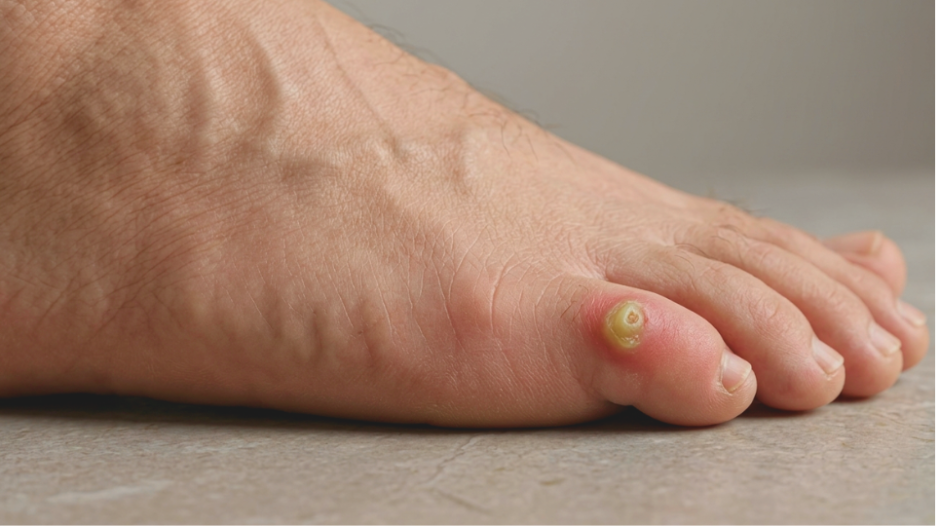
You should consider seeing a podiatrist if:
Early evaluation can help identify the cause and prevent the condition from worsening.
Understanding the different types of corns on feet is the first step toward effective treatment and prevention. While some corns may seem minor, proper care can make a significant difference in comfort and long-term foot health.
If you’re experiencing persistent discomfort or recurring corns, our team at Foot & Ankle Specialists of The Woodlands provides personalized care throughout The Woodlands, Huntsville, and the greater Houston area. You can explore our clinic locations or book an appointment online to get started with a treatment plan tailored to your needs.
Ingrown toenails are among the most frequently treated conditions in podiatric medicine, and while many cases resolve with proper at-home care
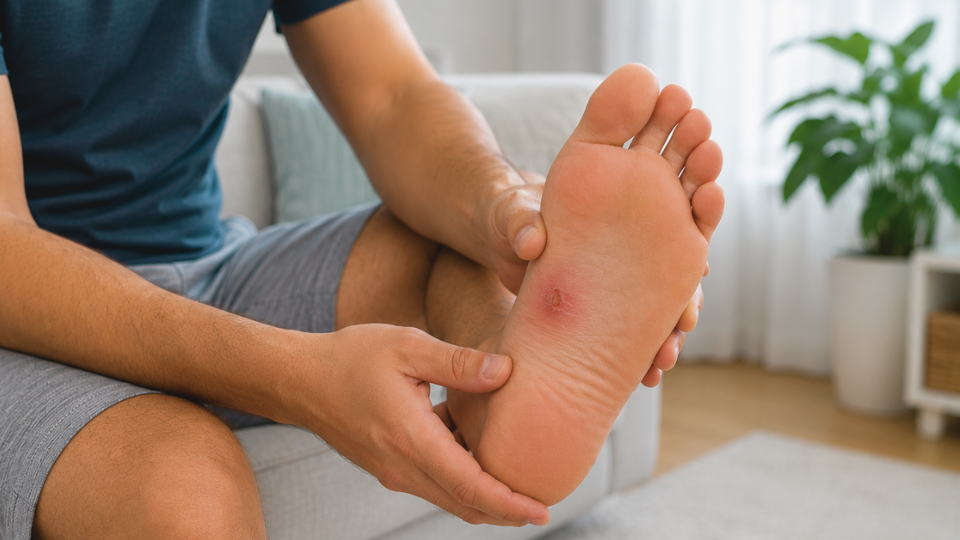
Learn to recognize the symptoms of an infected foot, key warning signs to watch for, and when to see a podiatrist for safe and effective treatment.