
Ingrown Toenails: When Home Care Stops Working
Ingrown toenails are among the most frequently treated conditions in podiatric medicine, and while many cases resolve with proper at-home care
Read More
--(3-x-1-in).jpg)


Peripheral neuropathy can affect sensation, balance, and muscle control in the feet. Because driving relies on precise foot movements to operate the gas and brake pedals, nerve damage may raise important safety concerns.
For individuals experiencing nerve symptoms, determining whether you can drive with neuropathy in your feet depends on how the condition affects sensation, reaction time, and pedal control. Understanding these factors can help drivers recognize potential risks and take steps to improve safety.
Peripheral neuropathy occurs when nerves that carry signals between the brain, spinal cord, and limbs become damaged. The condition most often affects the feet and lower legs and may develop due to diabetes, vitamin deficiencies, certain medications, autoimmune disorders, or circulation problems.
Common symptoms affecting the feet include:
Because the feet play a direct role in operating vehicle pedals, these symptoms may sometimes influence driving control.
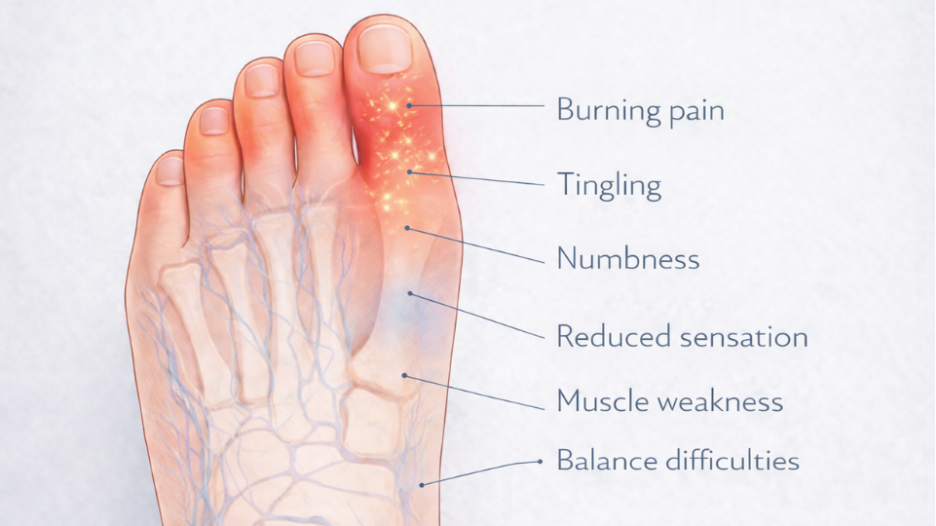
Driving requires coordination between the brain, legs, and feet to sense pedal position, adjust pressure, and react quickly to changing road conditions. When neuropathy affects sensation or motor control, these actions may become more difficult.
The impact of neuropathy and driving often depends on the severity of nerve damage. Mild symptoms may not significantly affect pedal control, but more advanced neuropathy can reduce the ability to feel pedal pressure or move the foot quickly between the gas and brake.
Reduced sensation may make it harder to judge braking force, while nerve damage can also slow communication between the brain and foot muscles, potentially delaying braking during sudden traffic situations.
When nerve function in the feet is impaired, several factors can influence driving safety.
Loss of feeling in the feet can make it difficult to detect pedal pressure, making it harder to judge how firmly the accelerator or brake is being pressed. This reduced feedback may increase the risk of applying too little braking force or reacting less precisely during sudden stops.
Nerve damage can delay signals between the brain and the muscles responsible for foot movement. Even small delays in braking response may increase the risk of accidents in emergency situations.
Neuropathy sometimes affects motor nerves, which control muscle movement. Weakness in the feet or ankles can make it harder to maintain steady pressure on the pedals during longer drives.
Some individuals experience discomfort from prolonged pedal use. In certain situations, the top of the foot hurts when driving, which may occur due to nerve irritation, pressure from footwear, or repeated positioning of the foot on the pedals.
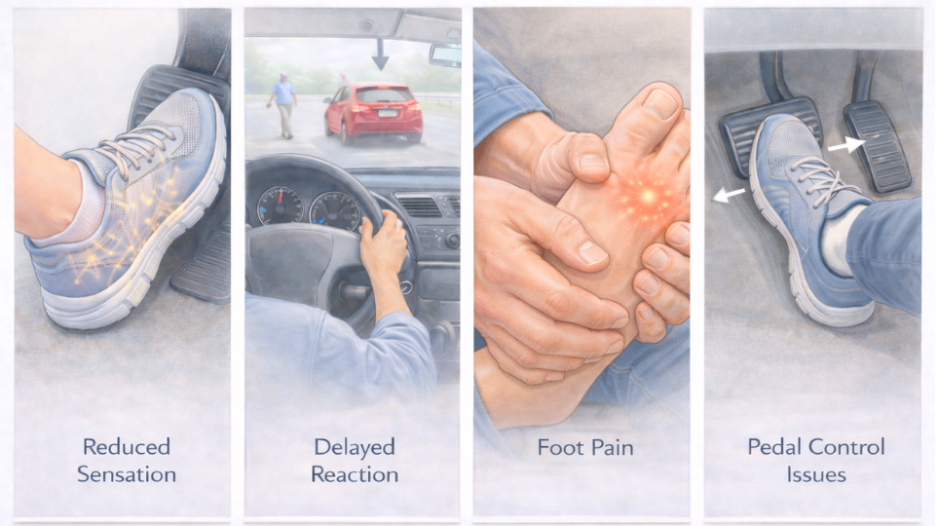
Certain symptoms may indicate that neuropathy is interfering with pedal control or reaction time.
Signs that may require closer evaluation include:
If these symptoms occur regularly, a medical evaluation can help determine whether nerve damage is affecting safe vehicle operation.
Many individuals can continue driving with neuropathy when symptoms are mild and properly managed. A few practical adjustments may improve comfort and control.
Helpful tips include:
These adjustments can help drivers maintain better awareness of pedal pressure and foot positioning.
Footwear can influence pedal control. The right shoes should provide stability while still allowing drivers to feel pedal pressure clearly.
Features to look for include:
Avoid shoes with thick soles or bulky cushioning that can reduce sensitivity and make pedal control more difficult.
Neuropathy symptoms should be evaluated if you notice:
Early evaluation can help identify the cause of nerve damage and prevent symptoms from progressing. If you are experiencing signs of neuropathy, specialized care is available through our neuropathy page.
Neuropathy does not always mean a person must stop driving, but monitoring symptoms and addressing nerve health early can help maintain safety and independence. Proper foot care, supportive footwear, and medical guidance all play an important role in protecting mobility.
If neuropathy symptoms are affecting comfort, balance, or driving safety, professional evaluation may help identify the cause and guide treatment. Foot & Ankle Specialists of The Woodlands serves patients throughout The Woodlands, Huntsville, and the greater Houston area. You can explore our clinic locations or book an appointment online to receive personalized care focused on protecting foot health and maintaining comfortable daily movement.
Ingrown toenails are among the most frequently treated conditions in podiatric medicine, and while many cases resolve with proper at-home care

Learn to recognize the symptoms of an infected foot, key warning signs to watch for, and when to see a podiatrist for safe and effective treatment.